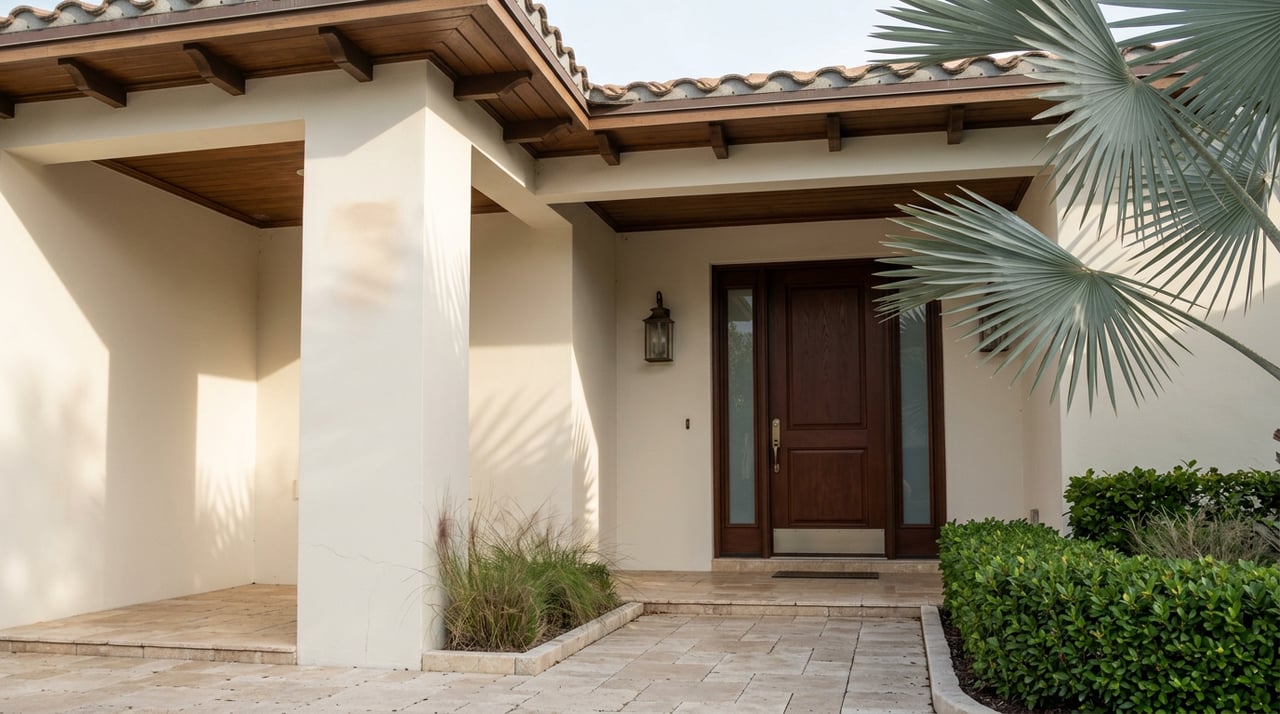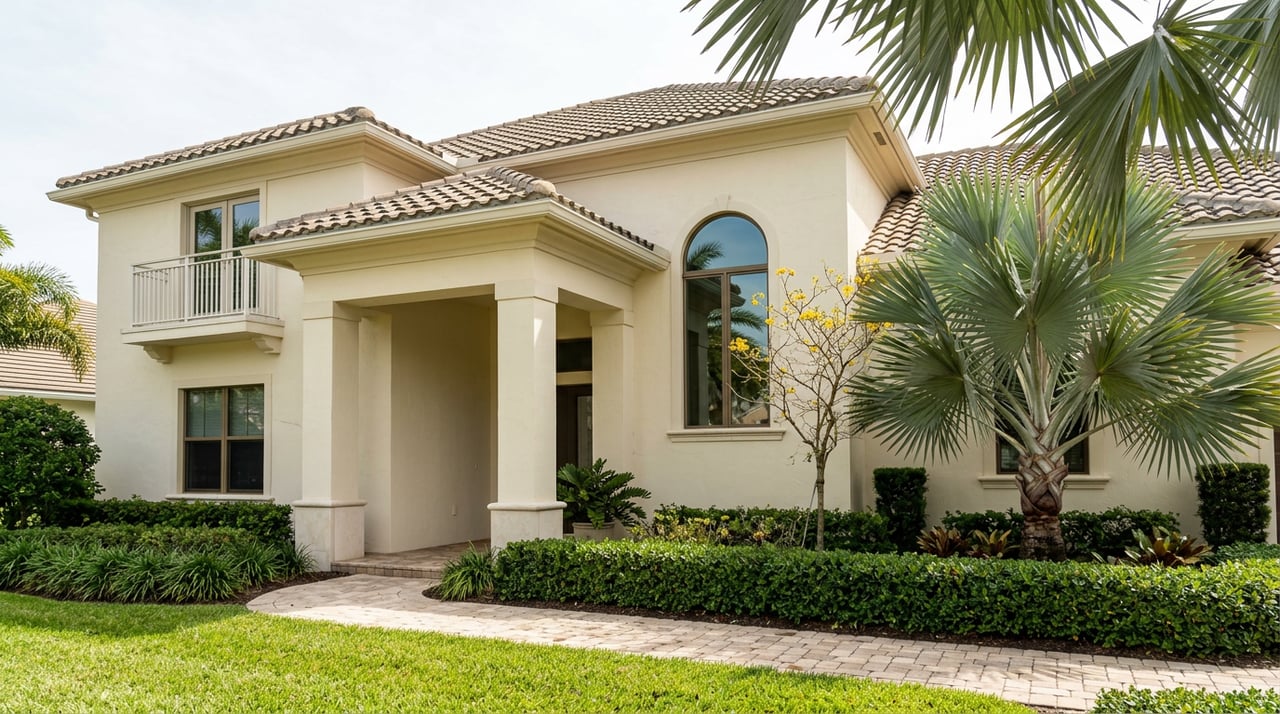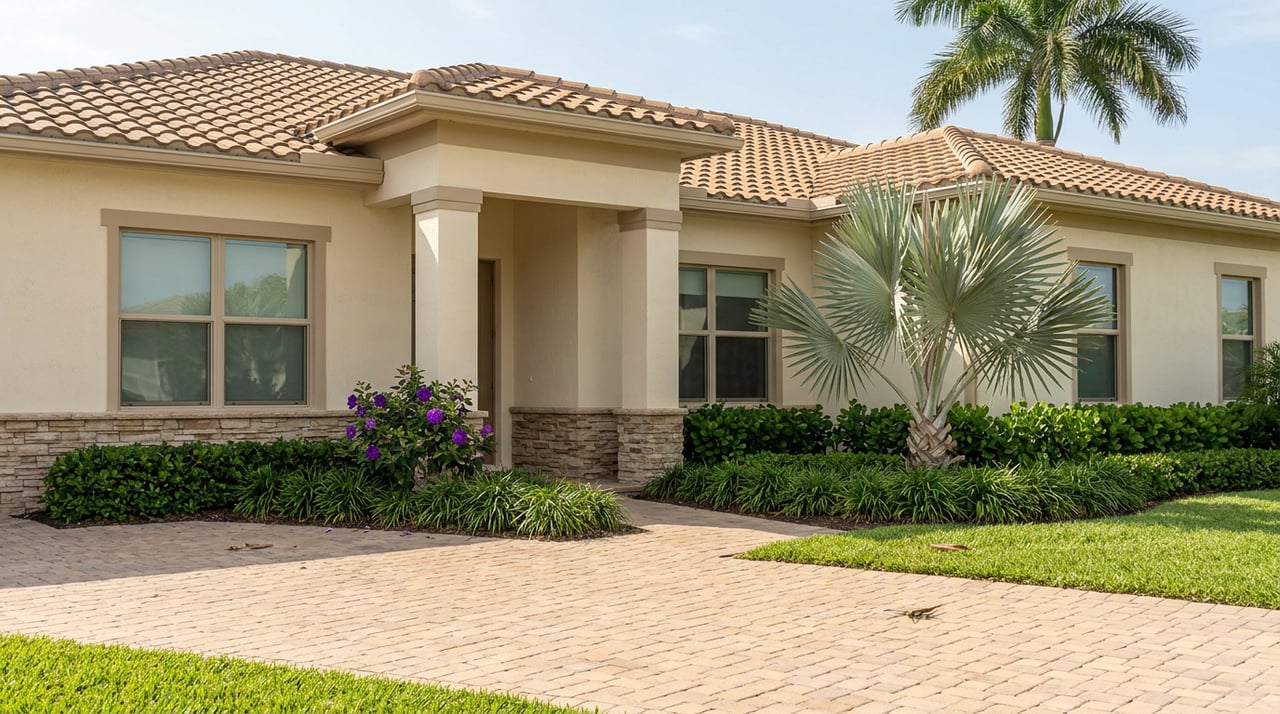
Two homes list for $430,000 in Parrish. Same square footage, same builder tier, same three-car garage. One buyer's total monthly housing cost ends up $300 higher than the other's, and neither the listing photos nor the price per square foot explain why. The gap lives on the tax bill, in a line item most buyers don't ask about until after they've already fallen for the floor plan.
That line item is the Community Development District fee, and in Parrish it is doing more work in your monthly budget than almost any other number on the settlement statement.
Where the "$100K cheaper than Sarasota" story comes from
Parrish earns its reputation as the value play in Manatee County honestly. As of September 2026, median listing prices in Parrish sit around $441,000 with homes spending roughly 69 days on the market, according to Realtor.com data. Closed-sale figures tell a similar story from a different angle: across 1,380 closings tracked over the six months ending in August 2026, the median closed price was $399,900, with the middle half of sales landing between $344,720 and $491,990. That is a tight, predictable band for a market this size, and it sits meaningfully below what comparable new construction commands closer to the coast.
North River Ranch is the clearest example of why. Its CDD assessments run $1,700 to $3,000 a year, which is comparable to what buyers pay in Wellen Park down in Venice, but the homes carrying that fee in Parrish cost $150,000 to $250,000 less than their Wellen Park counterparts. That gap is real. It is also the whole reason so many relocation buyers land on Parrish in the first place: the same fee structure, applied to a much lower base price.
But "comparable CDD fee" is doing a lot of quiet work in that sentence, because CDD fees in Parrish are not one number. They are dozens of numbers, and the spread between them changes what a buyer's true monthly cost actually is.
The spread nobody averages together
Here is what the fee structure actually looks like across a sample of active Parrish communities:
| Community | Builder(s) | Approx. HOA | Approx. CDD |
|---|---|---|---|
| Crosswind Point | Homes by WestBay | $10–$203/month | Lower end of the corridor |
| Crosswind Ranch | Homes by WestBay, Mattamy | $180–$360/year | Near $2,775/year |
| North River Ranch (Longmeadow) | Pulte/Del Webb | From $85/year | $1,700–$3,000/year |
| North River Ranch (Bella Lago) | DR Horton | Up to $148/month | $1,700–$3,000/year |
| Prosperity Lakes | Lennar | $1,968–$9,585/year (varies by product) | $1,854–$4,770/year |
| Aberdeen, Ancient Oaks, Chelsea Oaks, Creekside Preserve | Various, established | Low quarterly or monthly dues | None |
Two things jump out. First, a buyer comparing Prosperity Lakes' Townhome collection to its Executive collection isn't comparing two price points, they're comparing two entirely different fee ecosystems, because the HOA alone can range from under $2,000 to nearly $9,600 a year depending on which product line they're in. Second, Parrish still has established, non-CDD neighborhoods sitting quietly next to the master-planned giants. Older communities like Ancient Oaks, built out around 2006, and Chelsea Oaks carry no CDD at all, just modest HOA dues that in some cases already bundle cable and internet.
None of this shows up in a median price. A median tells you where the middle of the market sits. It says nothing about whether the specific home you're underwriting carries a fee structure that adds $150 a month or one that adds $600.
The fee you can pay off, and the one you can't
CDD fees are not one charge. They're two, stapled together on the same tax bill line. The bond portion pays down the debt the developer took on to build the roads, drainage, and amenities before a single house was sold. The maintenance portion pays for the ongoing upkeep of those same amenities, indefinitely.
You can pay off the bond early in many Parrish communities. What you cannot do is make the maintenance fee disappear. Even after the bond is retired, that maintenance line stays on your tax bill for as long as you own the home. The split between the two portions is typically close to 50/50, though it varies by community, and in a few cases, Bella Lago among them, the maintenance fee left standing after a bond payoff is unusually small, which makes an early payoff a more attractive move there than in a community where the maintenance side carries most of the weight.
This is the kind of detail that matters enormously if you're planning to stay ten years and matters far less if you're planning to sell in three. Before anyone pays down a CDD bond in Parrish, the question worth asking your agent isn't "how much is the CDD," it's "how much of it is bond versus maintenance, and what does that split mean for how long I need to own this house to make paying it off worthwhile."
A market that keeps rewriting itself mid-sentence
Parrish doesn't sit still long enough for a fee schedule to feel permanent. In August 2026, North River Ranch renamed its central 12-acre amenity hub to Camp Hidden Creek, after developer Neal Land & Neighborhoods discovered the creek running beneath the community dates back to the early 1900s, winding behind the clubhouse, under Longmeadow Avenue, and past the Bike Pump Park before continuing along the community's main trail corridor. It's a small rebrand, but it's also a signal: this is a community still actively shaping its own identity years into construction, not one that finished building and stopped talking about itself.
The growth pipeline behind that identity keeps feeding itself, too. Just this week, a 40-acre buildable parcel on State Road 62 came up for sale, carved out of a larger 107-acre assemblage to exclude the Gamble Creek wetland corridor and already carrying a previously engineered site plan for a single-family subdivision, according to a September 10, 2026 report in the Business Observer. That's the raw material for the next CDD-financed community, and it's a reminder that Parrish's fee-per-house math isn't a fixed feature of the market. It's a structure that keeps getting built new, one master plan at a time.
What the road project actually promises, and what it doesn't yet
The other piece of the long game is Fort Hamer Road, the primary corridor linking Parrish's master-planned communities to Bradenton and I-75. Manatee County's $190.5 million plan would widen the road from two lanes to four and add a parallel bridge span across the Manatee River, a project whose bridge portion alone carries a $77 million price tag. The Florida Department of Transportation approved the environmental study in July 2025, and the county's own project site puts the design phase on track to wrap in late 2026, with a public meeting tentatively scheduled for this fall.
Here's the part worth being precise about: as of the county's most recent project update, right-of-way acquisition and construction have not yet been funded. The 2028 construction start you'll see referenced across builder and brokerage sites is the expectation, not a locked commitment. Residents who sat through the December 2024 public hearing already understand the stakes. Greyhawk Landing's Denise Van Schaik told county staff, "We're having difficulty getting into our development now." Twin Rivers resident Tom Thayer, who moved from Fairfax County, Virginia four years earlier, put the long view a little more bluntly, worried about the corridor turning into the kind of gridlock he'd left behind.
For buyers weighing which side of Parrish to commit to, that timeline matters less as a countdown clock and more as context: the infrastructure that will eventually justify some of today's CDD-funded amenity spending is still in design, not dirt.
What this means if you're comparing Parrish to Sarasota or Lakewood Ranch
The lower sticker price in Parrish is not a mirage. It's a genuine value gap, and for a lot of relocating buyers it's the difference that makes the move pencil out. But treating that gap as a flat discount misses the point. The real comparison isn't Parrish versus Sarasota. It's one Parrish community's combined HOA and CDD load versus another's, on homes that can carry the same listing price and very different monthly obligations.
Before you fall for a floor plan, ask for the actual CDD assessment on that specific lot, not a community average, and ask whether it's trending toward payoff or was issued recently enough that you're carrying it for the long haul. Ask what portion is bond versus maintenance. And if you're choosing between a master-planned community and one of Parrish's older, fee-free neighborhoods, weigh what you're actually getting for that fee: the amenity center, the trail system, the swim center, against what an established neighborhood offers without it.
That's the kind of number that doesn't show up on a portal search filter, and it's exactly the kind of thing worth walking through with someone who tracks these fee structures community by community rather than as a single market average.
If you're weighing a move into Parrish, or trying to figure out what a specific community's fee structure actually means for your monthly number, Gerry Tomchinsky can walk through the real math with you before you sign anything. Let's Connect.